Legacy Makers Blog
Look through the blog to share some of the memories we made on our journey

New statue will highlight connections between East Midlands cotton mills and enslavement
A new statue will highlight the contributions and connections between white mill workers in the East Midlands and black enslaved women who grew the raw cotton supplies in the Americas.
The life-size, bronze ‘Standing In This Place’ statue will be placed in Nottingham’s redeveloped Broadmarsh area in summer 2024. It will highlight themes of sorrow, strength and resilience as it portrays the historical links between East Midlands cotton mills in the late 18th to mid 19th century and the raw cotton supplies that were sourced from estates that used enslaved labour.
A new statue will highlight the contributions and connections between white mill workers in the East Midlands and black enslaved women who grew the raw cotton supplies in the Americas.
The life-size, bronze ‘Standing In This Place’ statue will be placed in Nottingham’s redeveloped Broadmarsh area in summer 2024. It will highlight themes of sorrow, strength and resilience as it portrays the historical links between East Midlands cotton mills in the late 18th to mid 19th century and the raw cotton supplies that were sourced from estates that used enslaved labour.
Both Nottinghamshire and Derbyshire were home to cotton spinning mills in this period, feeding cotton thread into Nottingham's hosiery and lace industries. Several historical cotton mills still exist in Nottingham and there was once a huge cotton mill complex along the River Leen, although this has not survived. Broadmarsh was also once populated with textile workers and dye works The Derwent Valley Mills in Derbyshire, meanwhile, has been designated as a world heritage site by UNESCO . Recognised as the birthplace of the modern industrial factory system, its mills became the model for factories throughout the world.
Plans for the statue will be displayed at a new exhibition opening in Derby this weekend. The ‘Standing In This Place’ exhibition has been co-created by sculptor Rachel Carter, in partnership with the Legacy Makers community group.
Sculptor, Rachel Carter explains: “This project began with an interest in discovering more about my female ancestors, who found themselves working in a cotton mill as children. In 2020, I met members of the Legacy Makers group, who have been researching their African ancestors that were enslaved, trafficked and forced to labour in cotton fields. Together, we have worked on the idea of a sculpture that acknowledges the undeniable connection of these histories and this exhibition feels like we are one step closer to realising our vision.”
Isalyn Martin from the Legacy Makers group says “I believe women are essential to a thriving world. The Standing In This Place statue means so much to me as the statue symbolises Nottingham's female ancestors, both black and white, and their contribution to the wealth of the cotton industry. As a Nottingham resident, to see it it in the city will be very emotional and a joy to share with others.”
Louise Garvey, also part of the Legacy Makers group, adds: “The sculpture and exhibition are important representations of our cultural heritage, as it is important that people know where they come from as it informs how they interact with society and the world around them and how society and the world around them interacts with them.”
Until recently, there has been a reluctance or disinterest in explaining the East Midlands cotton industry’s links to slavery. However, in 2014, the Midlands-based Legacy Makers community group decided to explore and expose this hidden, or erased, history. They wanted to reveal how, behind each piece of spun thread, a high price had been paid in the pain and suffering of the enslaved Africans who had been forcibly trafficked to labour on cotton plantations in European colonies in the Caribbean, South America and the United States of America. Working with Dr Susanne Seymour, Deputy Director at the University of Nottingham’s Institute for the Study of Slavery, the partners addressed gaps in both the historical understanding, and public communication of, the Derbyshire cotton mills and their links to slavery. Dr Seymour has worked through the collaborative Global Cotton Connections project from 2014, to trace the raw cotton supplies that were brought to the Derwent Valley mills from around the globe and to interpret with descendant communities of colour the colonial and enslavement connections of the Derwent Valley Mills World Heritage Site.
Dr Seymour explains: “While the Derwent Valley mill owners have typically been regarded as opponents of slavery our team’s Global Cotton Connections research, funded by the Arts and Humanities Research Council, has revealed just how reliant they were on supplies of raw cotton grown by enslaved people of African descent in the Americas, from Brazil and the Caribbean to the southern states of America. Women formed a vital and major part of this enslaved workforce. Our academic and community collaboration involving volunteers of African descent from the Legacy Makers group has worked to change the public interpretation of the Derwent Valley Mills’ relationship with enslavement, showing where raw cotton supplies originated from and their production through the brutal system of transatlantic enslavement.”
The Standing In This Place exhibition is free to all visitors. It will open to the public at Derby’s Museum of Making from 14th July and it will run until 7th January 2024.
Press Release 10th July 2023 Nottingham University
RSA Event: Standing in this place: diversity and public art
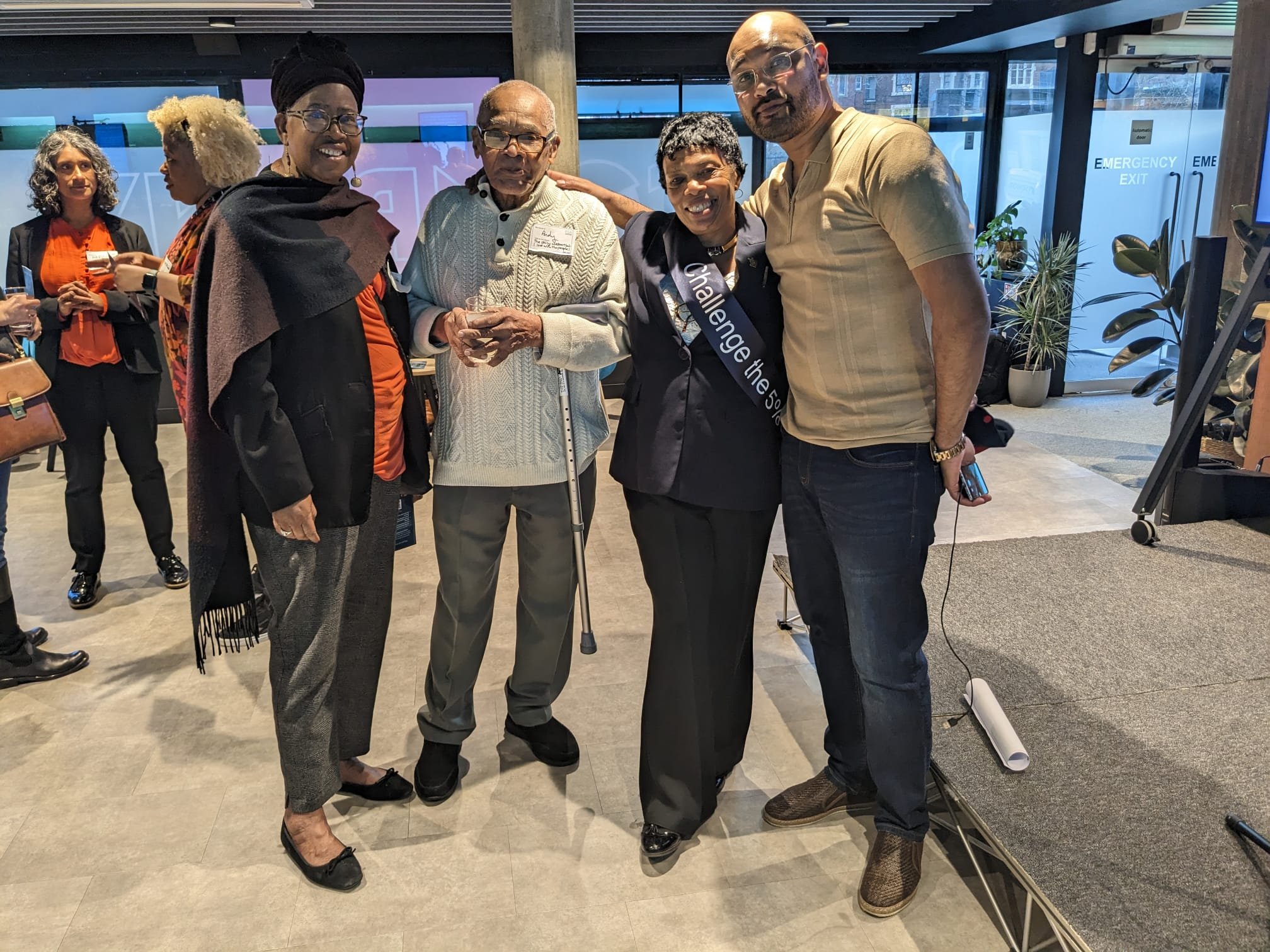
As the city contemplates proposals for a new statue in the Broad Marsh area, we held a stimulating evening of learning, conversation and connection on the 27 Mar 2023 at Nottingham Playhouse.
Historically many of our statues have been erected by leading civic organisations, businesses and public subscription. They celebrate and commemorate events and people that have helped shape our cities and nations. But did you know only 5% of public statues in the UK represent women and even fewer women of colour? What does their absence signify?
Standing in this place: diversity and public art
An evening of discussions led by Royal Society for the Arts Fellows
As the city contemplates proposals for a new statue in the Broad Marsh area, we held a stimulating evening of learning, conversation and connection on the 27 Mar 2023 at Nottingham Playhouse.
Historically many of our statues have been erected by leading civic organisations, businesses and public subscription. They celebrate and commemorate events and people that have helped shape our cities and nations. But did you know only 5% of public statues in the UK represent women and even fewer women of colour? What does their absence signify?
During the event we heard from:
Dr James Dawkins, and what he discovered about public statues and plaques in Nottingham.
The story of Rachel Carter’s sculpture, connecting local women textile workers with enslaved women working in the cotton fields of America and the Caribbean.
Legacy Makers – A HLF funded project by Bright Ideas Nottingham which encouraged local people to take part in a community history project exploring; what life was like for the residents of Darley Abbey in the nineteenth century, the village’s links to their enslaved African ancestors and connections to the wealth of Darley Abbey through the cotton trade.


Nottingham City’s Commemorative Landscape: Transatlantic Slavery and Female Memorialisation
Click below to read Excerpts from Dr James Dawkins talk on 27th March 2023
-
Doctor James Dawkins is a specialist in British Transatlantic Slavery.
He is currently a Research Fellow at the University of Lancaster where he is developing a digital register of British slave-traders.
James worked at the University of Nottingham from 2019 to 2021 where he led several projects that examined the city’s connections to the transatlantic economy in enslaved African people.
The most pertinent being his comprehensive review of statues and plaques across Nottingham that represent institutions and individuals linked to the slavery business.
Dr Dawkins is a member of the distinguished Legacies of British Slave-ownership project at University College London.
He also sits on a number of expert advisory panels for community and scholarly projects such as the ‘Colonial Countryside: National Trust Houses Reinterpreted’ and ‘Colonialism, Slavery, Trade, Reparations: Remedying the ‘Past’?’.
James is the author of numerous peer reviewed works, his most recent being Nottingham’s Universities and their Connections to the Transatlantic Slave Economy, which is slated for publication by the University of Nottingham in 2023.
-
In early June, 2020, shortly after Colston’s toppling, around 130 Labour councils up and down Britain announced that they would be reviewing their local statues, plaques, street names and buildings in order to identify those with connections to the transatlantic economy in enslaved African people.
Nottingham City Council was amongst the first of these local councils to step forward and make this announcement, after which they approached several colleagues of mine, including Dr Susanne Seymour and me, who were working at the University of Nottingham, to undertake this review.
Our study was conducted over a period of 3 months and produced a number of interesting findings. Over 40 statues, plaques, and street names, were identified that represent individuals who had links to the transatlantic economy and African enslavement.
These included initiators of the trade in enslaved African people such as Charles II who was a key character in the creation of the Royal African Company in 1660; the owners of enslaved African people, namely as Robert Smith, more commonly known as Lord Carrington; abolitionists such as Fergus O’Connor; the processors and manufacturers of raw materials imported into the country, which were grown and cultivated by enslaved African people on plantations in the Americas, like Richard Arkwright and Samuel Morley; formerly enslaved people such as George Africanus; and the descendants of enslaved African people who’ve made important contributions to Nottingham City, like as Eric Irons and Ms Veronica Barnes.
This report hasn’t been officially published yet, but you should be able to obtain a copy of it through Nottingham City Council’s culture and libraries department.
-
So as I’m sure you’ve noticed, only 1 out of those 8 names I just mentioned was of a female… and that’s Ms Veronica Barnes.
Across Nottingham City approximately 48 statues of named people exist – that’s to say statues named after real people.
Of this 48, just 12% (equivalent to 6) represent females, whilst the other 88% (42) memorialise males.
This is slightly higher than the national proportion, where around 5% (80) of statues across the UK celebrate named females, whilst 95% (422) honour named males.
And indeed, the global picture is even more bleak, with the Statues for Equality project estimating that women only make up 2-3% of public statues.
-
Although Nottingham’s honouring of females is slightly higher than the national and global rates, the proportion of women commemorated is still far from equal to the number of men.
Moreover, the figurines of Nottingham’s 6 females, with the exclusion of Queen Victoria, are nearly all situated inside of public buildings.
For example, the statue of Ms Barnes sits inside Nottinghamshire Archives, and the statue of Natasha Coates (a Nottingham prominent gymnast) is located inside the William Booth Museum.
They’re both also miniature in size, only standing about 1 foot or so tall, giving them low public visibility, which reduces awareness of their important contributions to Nottingham.
Moreover, when ‘race’ is included as a category alongside biological ‘sex’, only one of Nottingham’s 6 female statues represents a person of ethnic minority heritage and that’s the figure of Ms Barnes.
This highlights the under-representation of female ethnic minorities in Nottingham.
Furthermore, the statue of Ms Veronica was only created in 2018, meaning that Black women had no visible public acknowledgment in the form of a statue despite over 60 years of residence in Nottingham (when they arrived en-mass as part of the Windrush generation) and given almost 200 years of their provisions to the city in terms of the cotton they begrudgingly picked whilst enslaved in the Americas, which was imported into Nottingham and used to fuel its growing textile industry, between 1698 and 1888.
-
These facts make the creation of the life-size Standing in the Place statue designed by Rachel and the Legacy Makers, along with its proposed public location in the middle of the City’s new Broad Marsh centre, an important, relevant, and significant commemorative icon for acknowledging and paying tribute to the labour and ingenuity of working class women here, and enslaved women of African heritage in Britain’s former Caribbean colonies (along with the wider Americas), whose labour helped turn Nottingham into the vibrant and developed city it is today.
The Standing in the Place statue’s imminent instalment places Nottingham at the forefront of historic female recognition; and indeed, it makes Nottingham a regional, national and global leader in acknowledging the role females and enslaved women played in the growth of British civic society.
-
The RSA recently supported an event for the ‘Standing In This Place’ project, working with the Legacy Makers group and sculptor Rachel Carter.
We were delighted to support the evening. The underrepresentation of women, and people of colour, in public art matters, and the proposal for a new public sculpture in Broad Marsh, visible to everyone arriving in Nottingham by train, would be a hugely positive way to address this.
The proposed sculpture is a thing of beauty. The contribution of enslaved people and women textile workers to the prosperity of the East Midlands is largely under-recognised.
If it goes ahead, this sculpture will be a wonderful way to celebrate their contribution.
Yours faithfully, Lianna Etkind Fellowship and Area Manager (Central)
Questions ?

During the event we asked our guests to answer any of the four questions we wanted to discuss, here are their unedited responses:
What does the art in our public spaces tell us about the stories we choose to remember and pass on?
That white men rule
Tells us who we value
Some art doesn’t tell a story - its representing a theme eg Sky Mirror
Educates us and should show who inspires us
Recognises contribution to Nottingham public life
Where is Ada Lovelace square?
Carry on our history
Why are less than 5% of statues of women and even fewer represent women of colour?
We are undervalued
Women should give with no recognition
His story!! We live in a patriarchy
Need to understand the process towards getting a statue in place, influential women needed
Patriarchy
Our contributions are not recognised
History has been written by white men … until now!
Men think and still do think they are superior
Assumes they are irrelevant
Most of the studies are done by men. Women are not valued whatever they do be their domestic or other
What does their absence signify?
That we are not important
Outdated perspectives that should be challenged rather than perpetuated
We are invisible
Our stories are not as important
No equality
We’ve still got work to do
Women not valued
We are of no value
Change is not liked we need to keep educating
We are of less value
Invisibility of women and as women if we don’t stand up against these male behaviours it will continue
Nottingham City is not ambitious to be creative in 2023
What (and whose) stories remain hidden; absent from public view?
Refugees
Those that graft and do the real work
Emily Campbell
Mary Seacole
The oppressed
People without the vote, people without power
Minority groups and poorer people
Owners of gay clubs in 50s/60s/70s when they were so clandestine
Minority groups, women, people who are made to feel invisible
No role models for women/ women of colour
Minorities, women, different races
The majority of the people, workers, wives, need to celebrate all humanity. Women especially women of colour are always invisible